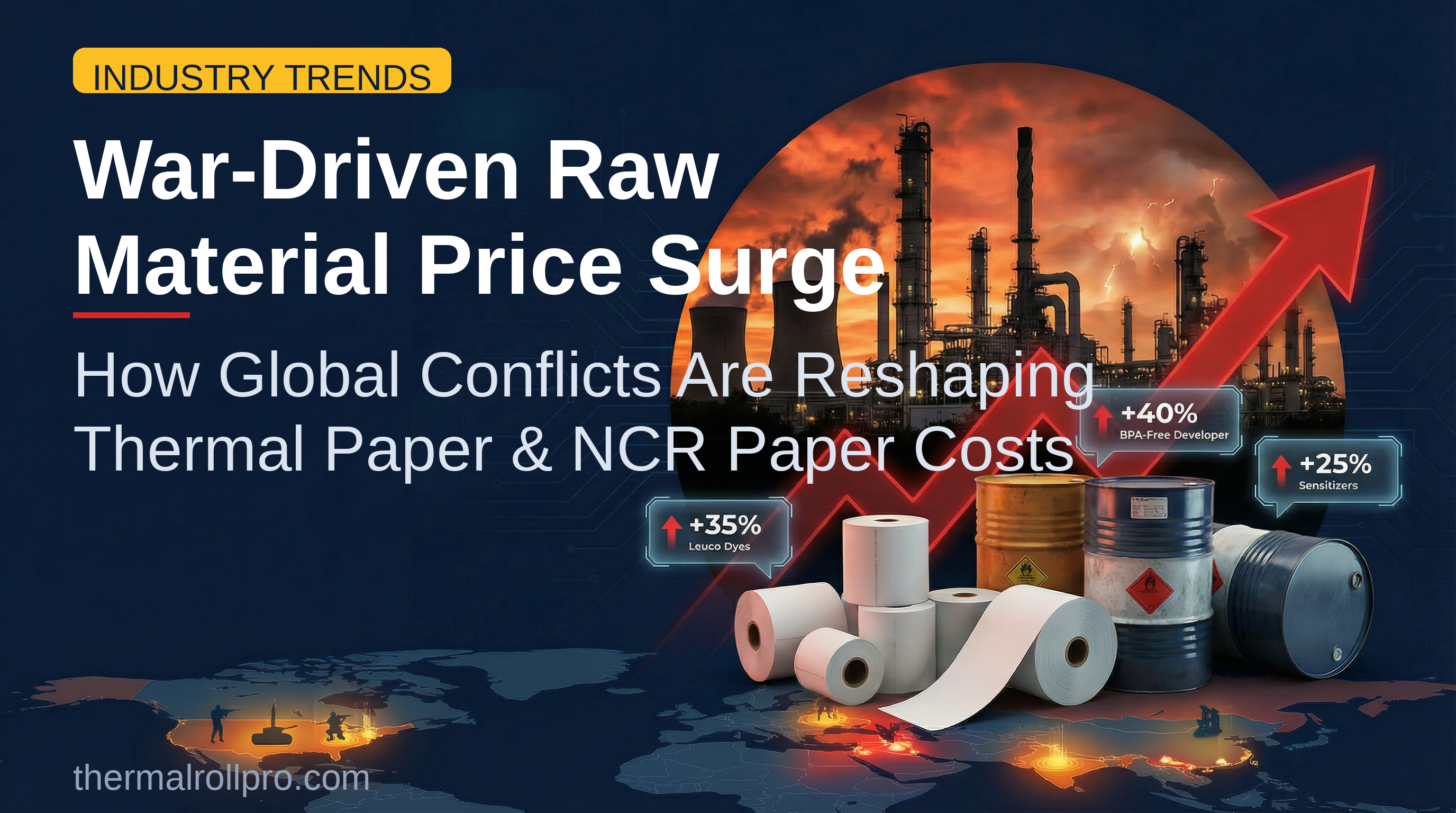
The Hidden Cost of War: Chemical Raw Materials Under Pressure
The thermal paper and NCR (No Carbon Required) carbonless paper industries are facing unprecedented cost pressures in 2026–2027, driven largely by geopolitical conflicts that have disrupted global chemical supply chains. For procurement managers and purchasing teams sourcing thermal paper rolls, thermal labels, and NCR forms, understanding these dynamics is essential for budgeting and supplier negotiations.
Key Raw Materials Affected
1. Leuco Dyes (Color-Forming Agents)
Leuco dyes are the core chemical component in thermal paper that creates the visible image when heat is applied. The primary precursor chemicals for leuco dyes — including ODB-2 (Crystal Violet Lactone derivatives) and fluorane compounds — rely heavily on intermediates sourced from Eastern European and Middle Eastern chemical plants.
The Russia-Ukraine conflict has severely disrupted the supply of key aromatic chemical intermediates. Ukraine was a significant producer of certain specialty chemical precursors, and sanctions on Russian chemical exports have further tightened global availability. As a result, leuco dye prices have increased 18–35% compared to pre-conflict levels.
2. Developers (Color Developers)
Thermal paper requires a developer chemical (typically bisphenol A / BPA, or BPA-free alternatives like D-8, Pergafast 201, or UU developer) to react with the leuco dye and produce a stable image.
The shift away from BPA (driven by EU REACH regulations and California Proposition 65) has pushed manufacturers toward more expensive BPA-free developers. Meanwhile, the conflict in the Middle East has affected phenol and acetone supply chains — both critical feedstocks for BPA production — adding further upward pressure on developer costs. BPA-free developer prices have risen 22–40% since 2022.
3. Sensitizers
Sensitizers lower the activation temperature of the thermal coating, improving print quality and sensitivity. Key sensitizer chemicals, including dimethyl terephthalate and certain fatty acid amides, are produced in regions affected by energy price volatility caused by the Ukraine conflict. European energy costs — which directly impact chemical manufacturing — remain elevated, contributing to sensitizer price increases of 15–25%.
4. Coating Binders (PVA and Starch)
Polyvinyl alcohol (PVA) and modified starches serve as binders in thermal coatings. PVA production is concentrated in China and Japan, but key raw materials (vinyl acetate monomer) are petrochemical derivatives affected by global oil price volatility. The Middle East conflicts have contributed to crude oil price instability, indirectly raising PVA costs by 10–20%.
5. NCR Paper: Microcapsule Chemistry
For NCR carbonless paper, the critical component is the microencapsulated dye precursor coating on the CB (Coated Back) layer. These microcapsules contain leuco dye solutions in solvent oils (typically diisopropylnaphthalene or alkylnaphthalene).
Naphthalene derivatives and specialty solvent production has been impacted by disruptions to Eastern European petrochemical supply chains. Combined with increased shipping costs through conflict-affected regions, NCR paper raw material costs have risen 20–30% since 2022.
Supply Chain Disruption: The Logistics Factor
Beyond raw material chemistry, the conflicts have created significant logistics challenges:
Red Sea Shipping Disruptions: Houthi attacks on commercial shipping in the Red Sea (beginning late 2023) forced major shipping lines to reroute around the Cape of Good Hope. This added 10–14 days to Asia-Europe shipping routes and increased container freight rates by 150–300% at peak periods in early 2024.
Port Congestion and Delays: Rerouted shipping has created congestion at alternative ports, leading to unpredictable lead times for chemical raw material deliveries.
Insurance Premium Increases: War risk insurance for vessels transiting conflict-adjacent regions has increased significantly, adding to overall logistics costs.
Impact on Thermal Paper and NCR Paper Pricing
The cumulative effect of these raw material and logistics pressures has been substantial:
| Product Category | Estimated Cost Increase (2026–2027) |
|---|---|
| Standard thermal paper rolls (BPA) | 15–25% |
| BPA-free thermal paper rolls | 25–40% |
| Thermal labels (direct thermal) | 20–35% |
| NCR carbonless paper (2-ply) | 20–30% |
| NCR carbonless paper (3-ply) | 25–35% |
Note: Actual price changes vary by supplier, order volume, and contract terms.
How Manufacturers Are Responding
ZhixinPaper, like other responsible thermal paper manufacturers, has been working to mitigate these cost pressures through several strategies:
1. Strategic Raw Material Stockpiling: Maintaining larger safety stocks of critical chemicals to buffer against supply disruptions and price spikes.
2. Supplier Diversification: Qualifying alternative chemical suppliers in regions less affected by current conflicts, including Southeast Asian and South American sources.
3. Formula Optimization: Working with chemical partners to optimize coating formulations, reducing the quantity of high-cost materials without compromising product performance.
4. Long-Term Supply Contracts: Securing forward pricing agreements with key chemical suppliers to provide cost stability for customers.
5. Energy Efficiency Investments: Reducing manufacturing energy costs to partially offset raw material increases.
Procurement Recommendations for Buyers
If you are sourcing thermal paper rolls, thermal labels, or NCR forms, here are practical steps to manage cost risk:
Lock in Pricing Early: Given ongoing geopolitical uncertainty, consider negotiating 6–12 month fixed-price contracts with your thermal paper supplier rather than spot purchasing.
Increase Safety Stock: Build 60–90 days of inventory buffer for critical thermal paper products, particularly BPA-free grades and specialty labels.
Evaluate Total Cost of Ownership: When comparing suppliers, factor in shipping costs, lead times, and quality consistency — not just unit price. A slightly higher unit price from a reliable manufacturer can be more cost-effective than cheaper product with quality or delivery issues.
Request Transparency on Raw Material Sourcing: Ask your supplier about their chemical sourcing strategy and how they are managing supply chain risk. Reputable manufacturers should be able to provide clear answers.
Consider Consolidating Suppliers: Working with fewer, more strategic suppliers can give you better leverage for pricing negotiations and supply priority during tight market conditions.
Outlook: When Will Prices Stabilize?
The timeline for raw material price normalization depends heavily on geopolitical developments that remain highly uncertain. However, several factors suggest a gradual easing may occur over the next 12–24 months:
- Alternative supply routes are being established as logistics companies adapt to Red Sea disruptions
- New chemical production capacity is being commissioned in Asia to reduce dependence on European and Middle Eastern sources
- BPA-free developer technology is maturing, with more suppliers entering the market and driving competition
- Energy price stabilization in Europe would reduce manufacturing cost pressures on chemical producers
That said, some structural cost increases — particularly the regulatory-driven shift to BPA-free developers — are permanent rather than cyclical.
Conclusion
The thermal paper and NCR paper industries are navigating a challenging cost environment shaped by geopolitical conflicts, regulatory changes, and supply chain restructuring. While manufacturers like ZhixinPaper are working hard to absorb and mitigate these pressures, some cost increases are inevitable.
For buyers, the key is proactive procurement planning: locking in pricing, building inventory buffers, and working closely with trusted manufacturing partners who have the scale and supply chain sophistication to navigate these challenges.
Have questions about current pricing or supply availability? Contact our sales team [blocked] for a personalized quote and supply chain consultation.
ZhixinPaper is a Chinese manufacturer of thermal paper rolls, thermal labels, and NCR carbonless forms with over 15 years of production experience. We supply B2B customers in 30+ countries with factory-direct pricing and OEM customization services.


